Interview with Armin Isler, Managing Director of the Dr. Stephan à Porta Foundation, Board of Trustees of the Fondation ZHdK, the foundation of the Zurich University of the Arts
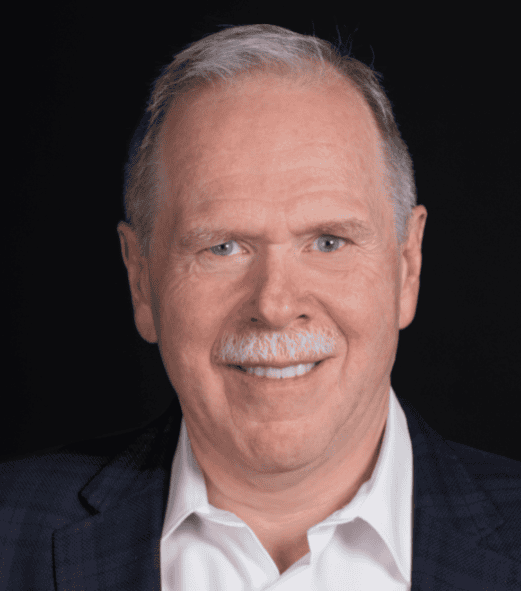
Mr. Isler, you are the Managing Director of the Dr. Stephan à Porta Foundation. Who was Dr. Stephan à Porta?
Stephan à Porta was born in Danzig on April 24, 1868. His parents, confectioners from the Lower Engadine, had moved abroad and achieved a certain level of prosperity there. Stephan à Porta became a lawyer and opened his own law firm in Zurich at a young age. Spurred on by the building boom, he and his brother bought a building plot in Zurich-Aussersihl in 1892 and had three houses built on it, which he sold at a profit. Until the Second World War, Stephan à Porta built several hundred houses in the city of Zurich. After the outbreak of the war, he decided to transfer most of his private assets - 144 houses with around 1,300 apartments - to a foundation.
What are the foundation's aims?
In the foundation deed dated May 19, 1945, which was entered in the commercial register on November 15, 1945, the foundation's purpose is defined as follows: "The purpose of the foundation is to donate the proceeds of the foundation's assets to charitable and non-profit institutions in Zurich (75%) and in the canton of Graubünden (25%)." The focus was and still is on institutions for people on the margins of society. In the articles of association, Stephan à Porta also stipulated that apartment rents should be set at a level that is still advantageous compared to similar apartments in the city of Zurich.
What criteria do you use to select the projects you receive?
Donations are made exclusively to tax-exempt, charitable non-profit institutions, e.g. associations or foundations, in the city of Zurich and the canton of Graubünden that help people and contribute to improving their quality of life. These can be, for example, socially and/or health-related disadvantaged people, people with disabilities, people with addiction problems, the elderly, asylum seekers and migrants. There are no plans to support institutions with cultural objectives or private individuals. Support is primarily provided for projects that go beyond the usual financial scope of the applicant and are of an exceptional nature. Contributions to cover operating deficits, on the other hand, are only granted in justified cases on an exceptional and one-off basis.
What advice would you give to an applicant who would like to work with your foundation?
If the majority of the projects benefit residents of the city of Zurich or the canton of Graubünden and are in line with the foundation's purpose, the chances of receiving support are very good. In this case, we would like to receive a short, concise portrait of the applicant institution and a transparent presentation of the project and the people who will benefit from it. The Dr. Stephan à Porta Foundation attaches great importance to ensuring that the grant really reaches those in need and improves their current situation and/or future prospects in the long term. As a matter of principle, we attach great importance to ensuring that longer-term, larger projects are broadly supported financially so that there is no dependence on a single foundation. This must also be documented.
You are also on the Board of Trustees of the Fondation ZHdK, the foundation of the Zurich University of the Arts. What is the purpose of the foundation?
The ZHdK Foundation specifically supports promising talent among students from all artistic and creative disciplines at the ZHdK, i.e. music, design, fine arts, film, dance, theater, art education and transdisciplinarity. However, projects that are of great importance for the development of the ZHdK are also supported. With the Excellence Scholarship, the ZHdK Foundation supports outstanding students in financing their Master's studies at the Zurich University of the Arts. As a substantial grant, this scholarship helps the most talented students to concentrate fully on their studies and develop their full potential. The Corona Solidarity Fund also supports ZHdK students who find themselves in an existential emergency due to the effects of the corona crisis.
What particularly appeals to you in your role as a member of the Board of Trustees?
I became interested in music and theater while I was still at secondary school and attended concerts and performances at various theaters. Professionally, I took a completely different path. But my fascination for the musical and visual arts has remained. On the Board of Trustees, I have the opportunity to contribute all my experience to the students of the arts together with like-minded colleagues.
I have great sympathy for the ZHdK and the Toni-Areal, as I was intensively involved in the transformation of the site from a milk factory to a university campus in my previous job at Zürcher Kantonalbank.
Finally, let's talk about patronage: what challenges and opportunities do you personally see for patrons who want to support art and culture in Zurich in the long term?
The financial circumstances of foundations and patrons are very different. Generally speaking, however, I believe that there are sufficient funds available for the sustainable promotion of art and culture. The cultural and art scene today is characterized by great diversity. Further outstanding talents are constantly being trained and promoted at universities. There are therefore numerous projects and opportunities for support. However, it is important to have a clear strategy as to what exactly should be supported and to what extent. Otherwise the "agony of choice" is endless.
The interview was conducted by Dr. Dr. Elisa Bortoluzzi Dubach. She is a foundation and sponsorship consultant, author and lecturer(www.elisabortoluzzi.com)