Development that endures: A conversation about responsibility and impact - with Valentina Beeler, Program Manager at the Suyana Foundation
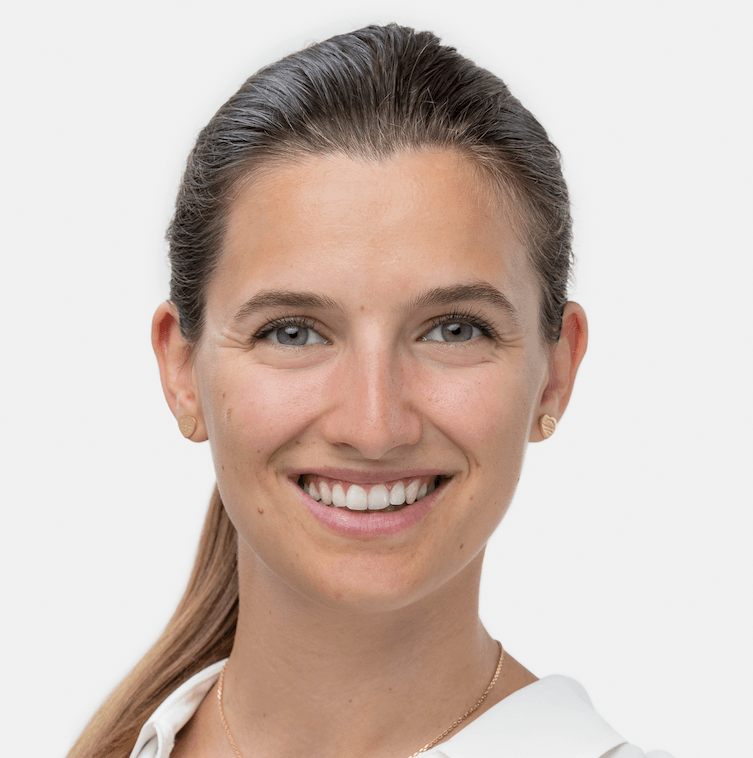
Ms. Beeler, could you please briefly introduce yourself and tell us about your professional background?
I am a dedicated professional who works with great curiosity and a sense of responsibility on global issues of nutrition and sustainable development. For almost three years, I have been working at the Suyana Foundation, where I contribute daily to advancing long-term and equitable solutions in the field of food security and food systems.
During my studies in International Relations, I discovered how much these topics fascinate me – and how much I want to commit myself to ensuring that people worldwide have access to healthy and sustainable livelihoods.
Before joining Suyana, I worked for an international organization. There, I gained valuable experience in development cooperation, which sharpened my perspective on global challenges and decisively shaped my professional path.
How did you come to the Suyana Foundation and what motivates you personally in your work?
After over two decades of dedicated work in Peru and Bolivia, where our holistic "Healthy Municipalities" program has been developed since 2003, the Foundation Board decided to bring the Foundation's experience into a new context and gradually become active in Africa as well. They were looking for people to accompany the establishment of a local presence with commitment, initiative, and a sense of responsibility.
I am particularly motivated by this building process: we deliberately start small, learn on-site, and develop the projects pragmatically and "hands-on" together with local partners and stakeholders. Trust, cooperation, and local expertise are at the center of this. Seeing how sustainable structures emerge step by step is inspiring to me every single day.
Could you give us an overview of the mission and core values of the Suyana Foundation?
The Suyana Foundation is characterized by a clear focus on rural and particularly vulnerable populations in low-income countries. The core approach is consistently "help for self-help": Suyana works on the basis of trust and the conviction that sustainable change only lasts if it arises from the community itself.
Another defining feature of Suyana is the commitment to continuous learning. Programs are not implemented statically but are continuously reviewed, adapted, and further developed to meet the actual needs of the local population. This learning culture goes hand in hand with strong rooting in the field: the team is closely connected to the projects and the local people, enabling practical, culturally sensitive, and effective work.
Building on over twenty years of experience in South America, Suyana is now transferring its knowledge to new contexts – always with the awareness that local expertise is indispensable. This combination of long-term experience, local trust, willingness to learn, and genuine proximity to the communities gives the Suyana Foundation a clear, unmistakable profile.
What is the main goal of the "Villages of Hope" project in Rwanda?
Around 70% of the population in Rwanda lives from agriculture – mostly for self-sufficiency. Therefore, improving agricultural production is a decisive lever to strengthen nutrition and health.
Better nutrition directly affects the development of children, such as their ability to concentrate in school. At the same time, sustainable cultivation methods promote soil quality and reforestation, which has positive ecological effects in the long term.
We achieve these changes through practical training, demonstrations, and the exchange between smallholder farmers – supported by professionals whom the local people trust.
What concrete challenges do the communities you work with face?
Many communities have limited access to important resources – including financial means, clean water, agricultural inputs, as well as functioning education and health systems.
In addition to material constraints, there are often structural deficits in access to technical knowledge, the development of entrepreneurial skills, and the availability of collective organizational forms – such as platforms to exchange ideas, plan together, or market products.
Furthermore, external factors like climate change both worsen living conditions and put increasing pressure on the population's livelihoods.
How does the project support the local population in a long-term and sustainable way?
A central approach is the establishment of structures that continue to exist even after the project ends. An example of this is savings groups: members regularly set aside small amounts and decide together how the money is invested.
These groups enable investments in small business ideas or community projects that would otherwise not be feasible. At the same time, they create a social safety net for emergencies.
Even more important, however, is the dynamics within the groups: trust, mutual responsibility, and cooperation grow over time. In the meantime, experienced groups are passing their knowledge on to new communities – a strong sign that the approaches have a sustainable impact.
What role do education, health, and economic independence play in the project?
The three fields of work interlock and reinforce each other. Suyana promotes economic independence by helping families learn to produce more efficiently, use their resources more purposefully, and plan their financial means consciously. Training in agricultural methods, small entrepreneurship, and financial literacy form the basis for this. At the same time, "Food Banks" create communal structures where smallholders can bundle their products, store them better, and market them under fairer conditions – an approach that strengthens local value creation and reduces dependencies.
Experience shows that as income rises, families are more likely to invest in health insurance and the education of their children. This creates a positive cycle that goes far beyond the immediate increase in income and improves the quality of life in the long term.
What distinguishes this approach is the combination of economic empowerment, community organization, and social security – an integrated model that doesn't just address individual problems but enables structural changes and promotes sustainable development from within.
Can you give an example of a success story from the project?
An impressive example is the story of a 65-year-old father. Previously, his family lived in extreme poverty: poor harvests, contaminated drinking water, frequent illnesses, and often only one meal a day characterized their daily lives.
Through the project, he received training in modern agriculture, access to improved seeds, as well as clean water and sanitary facilities. He also joined a savings group. The combination of technical knowledge, improved infrastructure, and financial self-organization is crucial – an approach typical of Suyana's way of working.
Today, his family achieves significantly better harvests and has a more stable income. He can specifically invest his savings in the further development of production, education, and health. He himself describes that he has found new courage and looks optimistically into the future. This demonstrates a central unique selling point of the approach: it is not just about short-term support, but about a sustainable strengthening of self-confidence and room for maneuver.
How does the Suyana Foundation work with local partners?
The implementation partner of the "Villages of Hope" project in Rwanda is the organization Dufatanye – an institution deeply rooted in the communities, creating a proximity that is crucial for sustainable development work. Dufatanye organizes training, accompanies families in their everyday lives, and documents progress systematically. This close anchoring in the local context is a central feature of the project and shows how much Suyana relies on partnerships that not only function operationally but build trust and impact over the long term. The joint launch of the second project phase for another three years underlines exactly this claim: development needs time, continuity, and reliable relationships.
Equally influential is the role of local leaders – at the village or neighborhood level. They know the needs of the people, help in selecting the families, and contribute to ensuring that the measures are culturally anchored and sustainable in the long term. Their participation ensures that the project is not perceived as an external intervention but as a communal process.
At the institutional level, Suyana also works closely with authorities, health centers, and local networks. These collaborations ensure that the measures do not act in isolation but are embedded in existing structures, thereby unfolding a sustainable impact.
In short: Suyana sets strategic guidelines, local partners like Dufatanye implement them – and the families and communities themselves play an active role from the beginning and continue the project after its completion. Exactly this combination of strategic guidance, local implementation power, and genuine community participation forms the unmistakable profile of this approach.
What opportunities are there for other organizations or private donors to get involved?
There are various ways to participate in our work – and each contributes to us achieving more impact together. For organizations and private donors, a collaboration with Suyana means one thing above all: becoming part of an approach that thinks long-term, is locally anchored, and is based on clear results.
Technical partnerships make it possible to bundle knowledge and further develop solutions. Financial contributions, in turn, create the basis for implementing central building blocks of our projects – from infrastructure to training to strengthening our local partner organization. Initial "seed funding" is crucial, especially for the further expansion of our presence in Africa.
Particularly valuable are long-term, reliable partnerships. They provide stability, enable planning security, and create the space to achieve sustainable change. At the same time, we attach great importance to transparency and a collaboration that is tailored to the needs and expectations of our partners.
One point is important to us: 100 percent of donations go directly into the projects; the overhead costs are covered by Suyana itself. Anyone who works with us is therefore not just investing in individual measures, but in a model that combines impact, responsibility, and local strength – and thus enables real development.