Interview with Ms. Sabine Hahnloser Tschopp
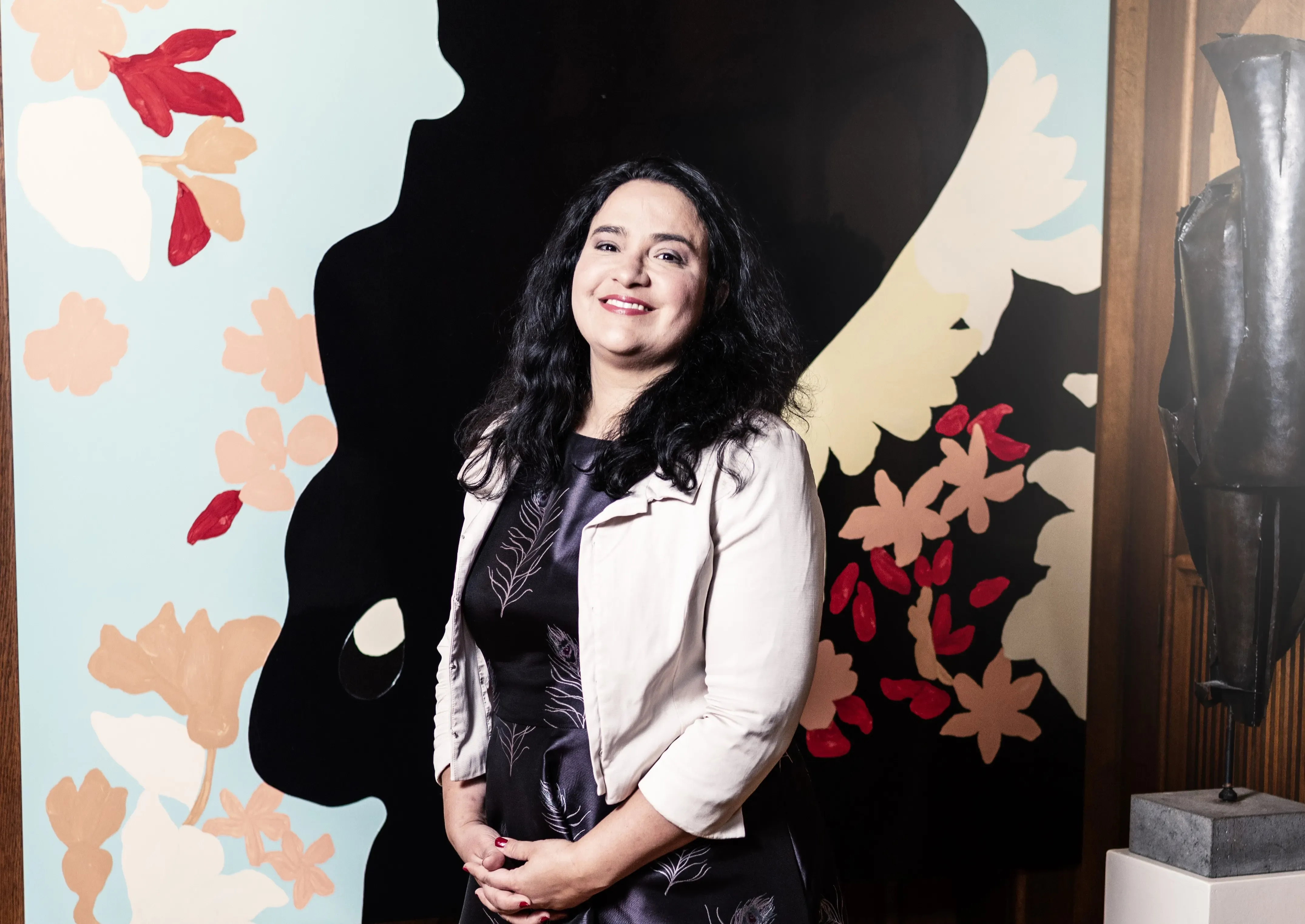
Sabine Hahnloser Tschopp studied art history and journalism in Bern and Montreal. She came into contact with art at an early age, as she comes from the Hahnloser family of collectors in Winterthur. She is now the 4th generation to continue this collecting activity.
Sabine Hahnloser Tschopp, you come from a family that has been committed to philanthropy and the promotion of art for many years. What did it mean to you to grow up in an environment where personal generosity has always been one of the core values?
Growing up in a culturally engaged family is like living in a soccer-loving family. As a child, you go everywhere, get involved and cheer as if it were the most normal thing in the world. It wasn't unusual for me as a child to visit exhibitions and socialize with artists. We had art hanging on the wall, it was familiar family pieces, just like other families in other forms. In 2nd grade, we had to take an object from home that meant a lot to me and my family. For example, my classmates brought a trophy from my father, his christening book or a nice family photo; I quickly took down a picture at home and wrapped it in a kitchen towel. The little Hodler hung in the classroom for two weeks until my mother noticed it was missing. For me, the little picture was just as important as my grandfather's christening booklet.
We were gently but firmly pushed into volunteering. As a child, I sold raffle tickets for the mission bazaar or stamps for Pro Juventute. Regularly shopping for our elderly neighbors was a duty and a responsible task; the pocket money of 20 Rp was immediately spent on Coke Frogs.
My parents set an example: both were always culturally and socially committed, worked on projects and helped set up associations and foundations. It wasn't about financial support, but first and foremost about personal commitment, knowledge and time for a good cause.
Is there a person who has particularly inspired you and why?
Yes, my mother Mania Hahnloser. She founded the Alliance Française de Berne in the 1970s and led this association for 35 years. Alongside her family, it was a project close to her heart and life, as well as her hobby. Her example inspires me to show similar dedication and makes me proud.
Why did your family set up the collection at Villa Flora?
The collection of my great-grandparents Hedy and Arthur Hahnloser is now on display at Villa Flora, the Hahnloser family home in Winterthur. The first works of art were purchased in the first decade of the 20th century, initially works by Swiss artists and a few years later art by the Nabis and Fauves in Paris. They mostly bought directly from the artists and their families or from galleries that were still avant-garde at the time. 'Vivre son temps' was one of their guiding principles. Buying from contemporary artists required not only an unerring eye for good art, but also courage and a willingness to take risks. Until Arthur Hahnloser's death in 1936, the couple supported their "guys" (i.e. their artists) through acquisitions and thus contributed to their livelihood. In the 1980s, the granddaughters and grandsons established the Hahnloser Jäggli Foundation with the collection; today the foundation owns around 400 works of art. Villa Flora was run as a private museum for several years and part of the villa was still inhabited by the family. In March 2024, the Villa Flora was officially reopened as the 3rd exhibition venue of the Kunstmuseum Winterthur after a successful renovation. A large part of the Hahnloser Collection is now on permanent display there.
It is very important to me personally to keep the legacy of my ancestors alive. It is a wonderful privilege for each subsequent generation to live with art - to experience it. It is wonderful to be able to share this with other people, also through loans, donations, commitment to artists and art spaces and, last but not least, by building up our own collection.
You are committed to art and culture with significant personal involvement, which continues in various forms. What does philanthropy mean to you?
Philanthropy actually stands for love of people - it stands for voluntary help and support. Anyone who does something good for someone else is a philanthropist. I do that too - and I like doing it.
Today you are President of the Kunsthalle Bern Foundation. What is the foundation's purpose and what is your task?
Over the past 36 years, the Kunsthalle Foundation has built up an important collection of contemporary art thanks to the funds provided by its donors. This now comprises around 200 high-quality works of art by national and international artists. Works from the Kunsthalle Foundation's holdings are regularly requested for exhibitions at the Kunstmuseum Bern and in international museums. This confirms that we are on the right track and allows the Foundation to make works visible and accessible to a broad public.
The activities of the Kunsthalle Foundation are a statement for the Kunsthalle Bern. Since its establishment in 1918, it has been writing international art history and helping to shape new trends. It has never shied away from heated discussions about the works of young and unknown artists and has set many things in motion. For many renowned artists, the Kunsthalle Bern was the first stop in their exhibition biography, including Paul Klee, Ludwig Kirchner, Meret Oppenheim, Giovanni Giacometti and Jasper Jones. The list is long and impressive.
The Kunsthalle Foundation has a considerable annual acquisitions budget. This is funded by generous contributions from donors.
What can philanthropists achieve that the public sector cannot?
Most people I know volunteer for an association, as a coach for a sports club, in care for the elderly or in charitable foundations. Everyone is a benefactor.
Often, SMEs and companies have also supported a project that is close to their hearts. We are incredibly privileged in Switzerland: we are doing well, we live in a state that cares for its people, protects us and serves the population. We all help a little with our commitment. The term 'voluntary work' expresses it - out of a sense of honor and decency, people volunteer for their values, for a cultural and social task. With financial and human resources and active commitment, we can achieve something that the public sector cannot always do. Patrons can step into the breach, make spontaneous decisions and act more quickly.
In your opinion, what structural changes in society will have an impact on philanthropy in the coming years?
According to a study by the GDI, it is increasingly difficult to find volunteers for long-term and regular work. Some people have far more than they need to live on and are willing to share it with others. In fact, time is one of the most valuable and beautiful commodities: giving time as a gift is generous and good for both the recipient and the giver.
For me, realizing an idea with personal commitment, time and money, is one of my most beautiful tasks of all.
The interview was conducted by Dr. Dr. Elisa Bortoluzzi Dubach. She is a foundation and sponsorship consultant, author and lecturer (www.elisabortoluzzi.com)
Seminar "Successful collaboration with patrons"
The seminar "Successful collaboration with patrons» is fully booked, but SwissFundraising is still accepting 4 people. Potential participants can register on the waiting list.