Interview with Noémie Linsig - ethnobiologist and co-designer of the honeybee discovery trail
1. Ms. Linsig, what personally inspired you to work with bees as an ethnobiologist?
I've always been fascinated by the different types of beekeeping and the traditions associated with them. For my Master's thesis, I studied the influence of gender on agriculture among the Mwimbi in Kenya. Closely linked to cosmogony, beekeeping is a male domain, and although my work wasn't directly concerned with it, I was able to observe beekeeping practices in horizontal trunk hives, and the use of hive products. In Mexico, I caught a glimpse of the world of melipona bees. And with FreeTheBees, I discovered biodiversity cavities, the Rolls Royce of nesting boxes, and the Zeidlerei, ancestral forest beekeeping, and how our current intensive beekeeping and agricultural practices impact the survival of bees.
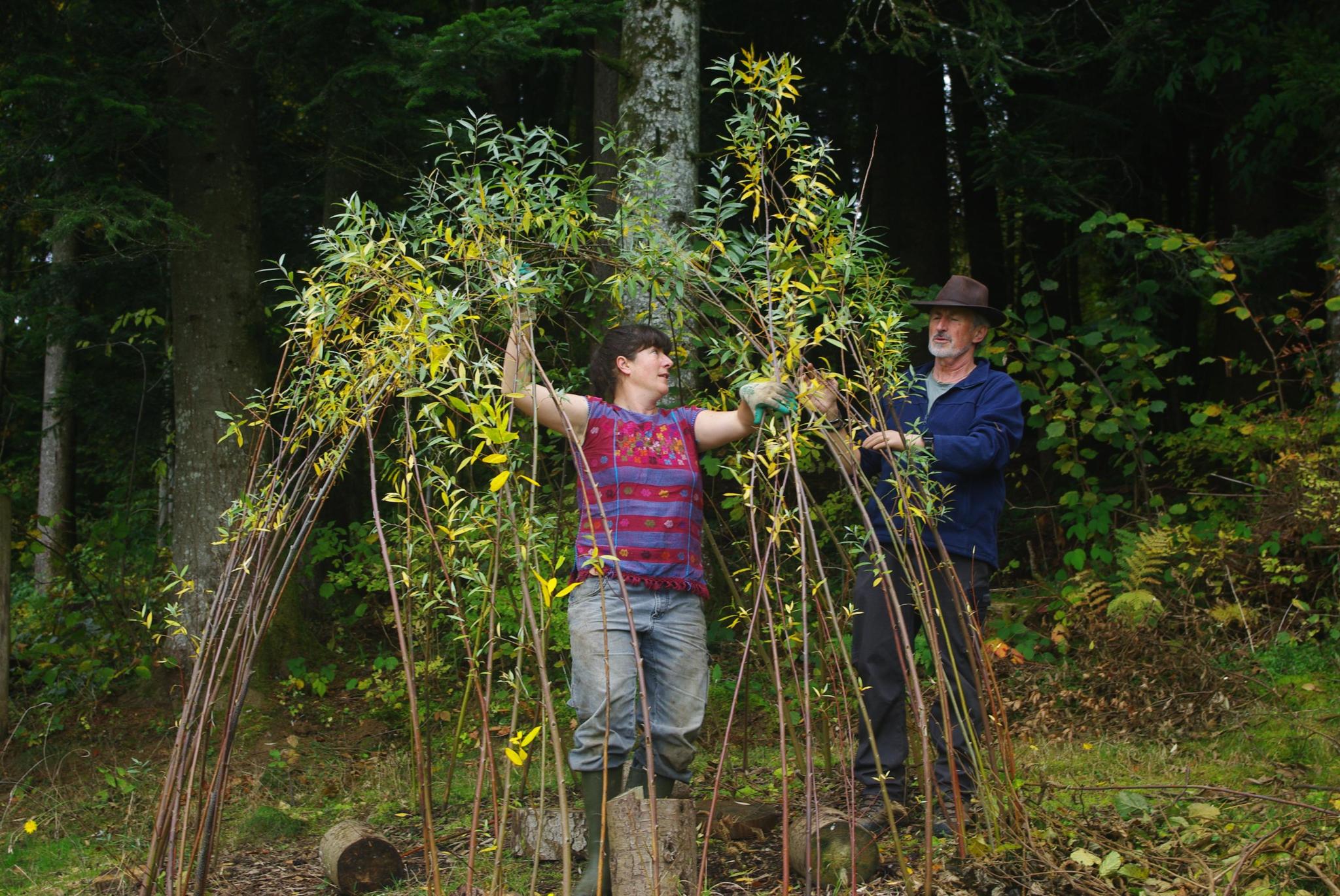
Now I have the opportunity to put my knowledge into practice for the benefit of bees. So, by developing this melliferous garden, I'm working for the bees, with the aim of providing food for the site's colonies all year round. This involves restoring natural habitats and planting a wide variety of trees, shrubs and perennials with abundant flowering throughout the year.
2. How would you explain to someone in simple terms exactly what ethnobiology is, and what role bees play in it?
Ethnobiology is the study of the relationship between human societies and the environment. It looks at the factors influencing our practices, such as our belief systems and worldviews, which are then projected onto the way we live together. An individual, and more broadly a society, will not treat a forest in the same way, whether it considers each tree that makes it up as its own individual, or whether a god created it for its own use.
Similarly, our relationship with animals and livestock also reflects our vision of the world. Beekeeping, for example, plays a key role in ecosystems, and is essential to the maintenance of natural or extensive environments. In our industrialized, productivist society, we exploit bees' work to the full, harvesting their honey production and feeding them sugar to get them through the winter. In certain German traditions, the bee colony was seen as a family member in its own right, with whom we shared both happy and unhappy family events: marriage, birth, death. The beehive was personified by the addition of a mask, making it human in a way. In the Zeidler traditions of the Urals, the colonies, set up in the cavities of living trees, are handed down from generation to generation, and are exploited very extensively. Only a small proportion of the honey is harvested, leaving the colony with sufficient reserves to get through the winter.
3. How did you become a FreeTheBees contributor?
In 2023, I took part in a training course on creating biodiversity cavities. The keystone aspect of these cavities immediately aroused my curiosity. I then got to know the FreeTheBees team, and in particular André Dunand, its president, who was beginning to develop the concept of the discovery trail. As a result, I was commissioned to create the melliferous forest garden, an important element of the trail.
4. You are co-creator of the Bee Discovery Trail. Can you briefly summarize the trail?
The aim of the trail is to help visitors discover the different facets of the life of bees, and of wild colonies in particular. Visitors can learn about the evolution of the bee, its role in the ecosystem, its different habitats and its life cycle. A demonstration hive, set up in the barn and its flower bed, allows visitors to observe an active colony and the construction of comb.
As the garden develops, a strong emphasis is placed on bee-friendly plants and natural environments that can be found on site, as well as natural garden practices that can be reproduced at home.
We learn as much about bees as we do about the plants we can plant to support pollinators.
5. What was your most important idea when working on the Honeybee and Biodiversity Discovery Trail?
When I discovered the site, I wanted to emphasize the natural environments present on site, such as the wet meadows and all the associated flora: comfrey, chives, Siberian iris, purple loosestrife, as well as the borders, which we enriched with species. Another crucial aspect is to offer bees continuous flowering, from hazelnuts, willows and male dogwoods in late winter to ivy and hellebores in late autumn and even winter.
6. What feedback have you received from visitors to the trail so far? Have there been any surprising reactions?
The local population is delighted with the development of such a place of relaxation and discovery so close to home. School classes are delighted with this new goal for guided or turnkey excursions. Over 500 children were welcomed this spring. The best feedback from a child after a day on the site: " I'd love to live here!
We also host participatory workcamps, which enable participants to learn by doing, while giving a serious boost to trail maintenance and development.
7. What do you think children and young people can learn by following a trail that goes beyond biology lessons?
This type of orientation is very open-minded. And this knowledge is invaluable to society. It's very important to be able to study and understand how our cultural perspectives influence our relationship with the world, and also how it shapes our research.
8. How do you see the role of initiatives like this trail in raising awareness of nature in society?
This type of initiative brings a new perspective to environmental management. The discovery trail, for example, gives us a better understanding of how ecosystems work, and highlights aspects of bee life that we tend to forget, such as the fact that bees are forest insects.
I hope that our forest garden can also lead us to appreciate native flora for its intrinsic beauty, and allow us to be more lenient towards weeds, which are often quite useful.
9. And finally, a general question: what can each individual do to ensure the bee's well-being?
If possible, plant melliferous trees, such as lime, maple, hazelnut, willow... Their abundant flowering is an essential source of food for bees and benefits the whole environment, by storing carbon, cooling the atmosphere and providing shelter for many other species. In the same way, letting ivy climb up a tree or facade is a great help to bees as winter sets in.
We can all make a difference, whether by letting our chives and thyme bloom on the balcony, or by letting part of our lawns bloom, or by volunteering our time on a volunteer day, or by opting for a hedge of native shrubs, or by supporting the work of associations such as FreeTheBees. Each of us at our own level can have a positive impact on the nature around us.
Contact details
Noémie Linsig
Biodiversity and Natural Garden Design Consultant,
Grand-Rue 40
1315 La Sarraz
[email protected]
LinkedIn
Instagram