Interview with Rainer Schlegel, Director Straumann Group Foundation - Switzerland
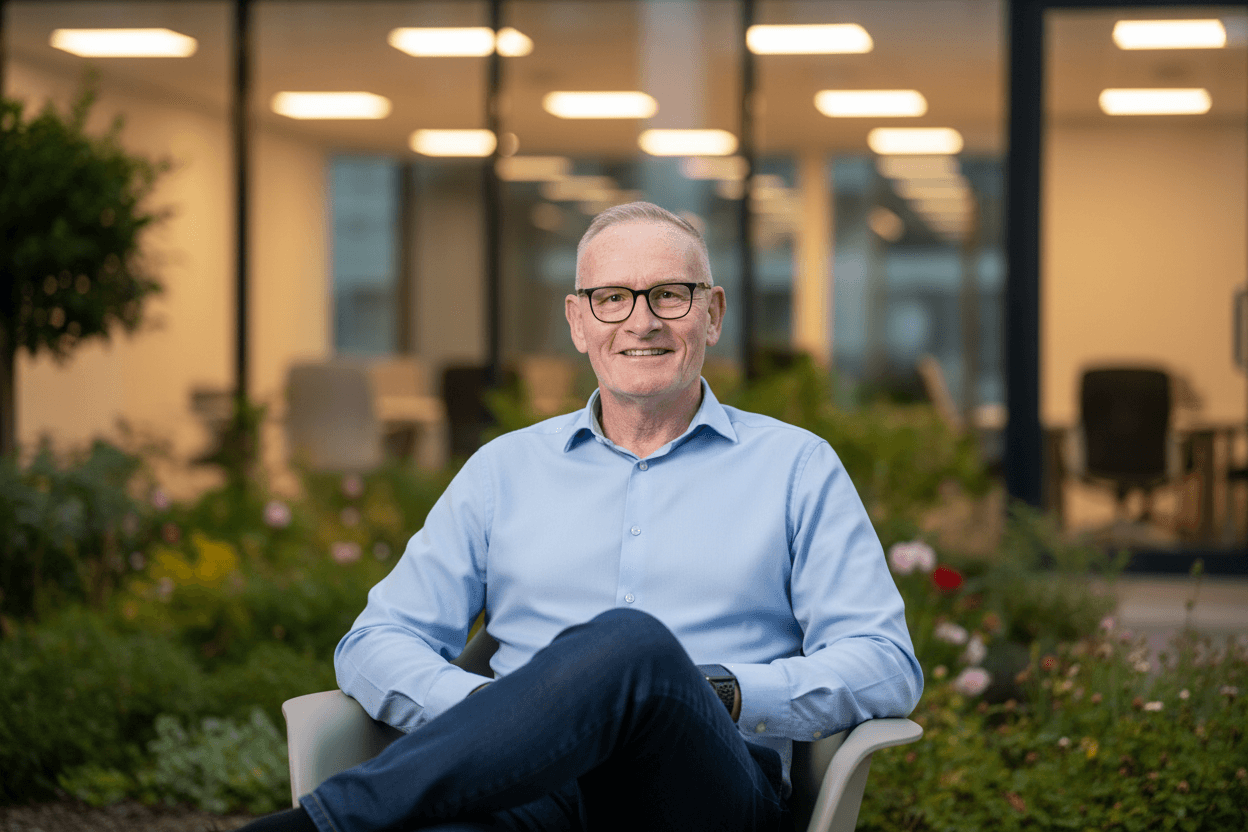
Breaking down barriers, creating impact: The power of targeted health promotion
Mr. Schlegel, could you tell us about your professional career and explain how you became Director of the Straumann Group Foundation?
In my 40 or so years in the private sector, I have worked for over twenty years in the global healthcare sector, particularly in medical technology - and the last ten years in the dental industry. I was able to take on very different perspectives: from brand and communication management to leadership roles in strategic projects and international collaboration with healthcare professionals.
Throughout all these stations, one common thread has remained constant: a personal humility and the awareness that we are privileged and can give something back to society.
I see the opportunity to lead the still very young Straumann Group Foundation from summer 2025 as the ideal conclusion to my professional career. Here I can combine communication talent, industry expertise, leadership experience and my personal understanding of values to make a contribution that goes beyond economic goals - towards real social impact. And as a newcomer to the foundation, I learn something new every day, which suits my nature very well.
What personal experiences have particularly shaped your view of the role of foundations in a social context?
The WHO's Global Oral Health Status Report 2022 was a real eye-opener for me. Seeing that billions of people worldwide suffer from treatable oral diseases and yet have no access to care changed my perspective forever. This report was one of the reasons why I decided to put my experience even more strongly at the service of a mission that can really change lives.
Added to this is the personal encounter with people whose quality of life is severely limited by a lack of access to oral healthcare. You quickly realize how closely oral health is linked to dignity, participation and educational opportunities.
Finally, I realized how effective foundations can be when they think long-term, cooperate across sector boundaries and promote evidence-based programs - even beyond purely economic criteria. Foundations can take risks, enable innovation and help close structural gaps - this is precisely where their social value lies.
What is the central mission of the Straumann Group Foundation and which topics are at the forefront of your work?
Our mission is simple in its formulation, but challenging in its implementation: to improve access to oral health in order to improve the quality of life for people in need. In doing so, we want to help ensure that oral health is not a privilege, but is accessible to everyone. In doing so, we deliberately look beyond treatment alone and focus on the factors that determine access worldwide: Awareness, accessibility, affordability and availability.
Our programs therefore start where barriers arise - be it a lack of knowledge about prevention, a lack of infrastructure, financial hurdles or simply a lack of qualified specialists. By supporting projects that break down these barriers, we strengthen local healthcare systems and create the conditions for long-term impact.
Our aim is clear: sustainable improvements instead of short-term solutions - impact that lasts even after a project has ended.
How does the Straumann Group Foundation differ from other corporate foundations in Switzerland and internationally?
What possibly sets us apart is our clear thematic focus and our long-term commitment in an area in which we, as a company and indirectly as a foundation, have in-depth expertise. We do not act as a general funding foundation, but as a specialized expert in global oral health - this is where we see the greatest leverage for our commitment.
In addition, we combine philanthropic approaches with a strong awareness of systemic impact. We therefore not only support individual projects, but also aim to strengthen local structures - through training, partnership models and long-term development programs. Thanks to our international reach and a strong specialist community, we can be both locally anchored and globally effective.
Why do strategic partnerships play such a central role in your work and how do you define their added value?
Despite our focus, the field in which we work is so large and complex that no one can achieve a lasting impact on their own. Real change only comes about when expertise, resources and local networks are brought together in a meaningful way. This is why strategic partnerships are indispensable.
They not only enable us to reach more people and provide higher quality services, but also to build long-term impact - because partners who are deeply rooted in a region know what works and what doesn't on the ground.
An often underestimated added value lies in joint learning. Partnerships create spaces in which different perspectives meet, complement and reinforce each other. People learn from each other, correct approaches, develop new ideas and better understand the local reality. This leads to more effective and innovative solutions.
For us, partnerships are therefore not a "nice to have", but a key factor in initiating systemic change - by combining global knowledge with local experience.
What criteria do you use to select partner organizations and how do you ensure that shared values and goals are aligned?
We work with a clearly defined selection process that includes both strategic and ethical criteria. These include, among other things
- Thematic fit: the partner and the project must have a direct link to improving oral health or make a clear contribution to it.
- Values & governance: Transparency, integrity and a solid organizational structure are essential for us.
- Systemic impact orientation: We only choose partners who measure their impact and are willing to learn and evaluate together. Projects must be anchored locally and strengthen the community systemically and sustainably - no one-offs.
Before we enter into a partnership, we hold detailed discussions, check references and develop a shared understanding of impact. In this way, we ensure that goals and expectations are aligned on both sides.
The collaboration with the Suyana Foundation is an example of a partnership in the foundation sector. How did this cooperation come about and what joint approaches were developed?
In fact, a bit of coincidence played a role at the beginning: my colleague and Deputy Director Jana Erdmann and an employee of the Suyana Foundation got talking at an event and immediately discovered common themes. However, this initial spark quickly turned into a substantial dialog.
Both foundations share the conviction that healthcare programs only have a sustainable impact if they combine individual treatment with structural strengthening and are anchored locally - especially in regions with severely limited access to care.
In our discussions, it quickly became clear how well our approaches fit together. Suyana contributed its decades of experience in holistic development cooperation. Since the beginning of its work in South America, dental health has been a central focus. We complement this with our expertise in oral health. This mutual learning has led to a common understanding: we not only want to provide care, but also strengthen local systems so that they are self-sustainable in the long term.
In this way, we jointly pursue an integrative approach that combines medical care, education and community-oriented development work - with the aim of strengthening local structures such as family and community. It is precisely this complementarity that makes our cooperation so valuable.
For our readers: Could you briefly explain what the Suyana Foundation focuses on and how this fits in with your work?
The Suyana Foundation focuses on long-term development work in rural and underserved regions, particularly in Latin America, increasingly also in Africa and in selected contexts in Switzerland. Its focus is on health, education and strengthening livelihoods, implemented through a holistic program - always with the aim of strengthening local structures and communities and thus empowering local people to improve their living conditions in a self-determined way.
A central component of its work is its own teams that implement the programs, close cooperation with local authorities and experts, active involvement of the communities and strengthening local systems.
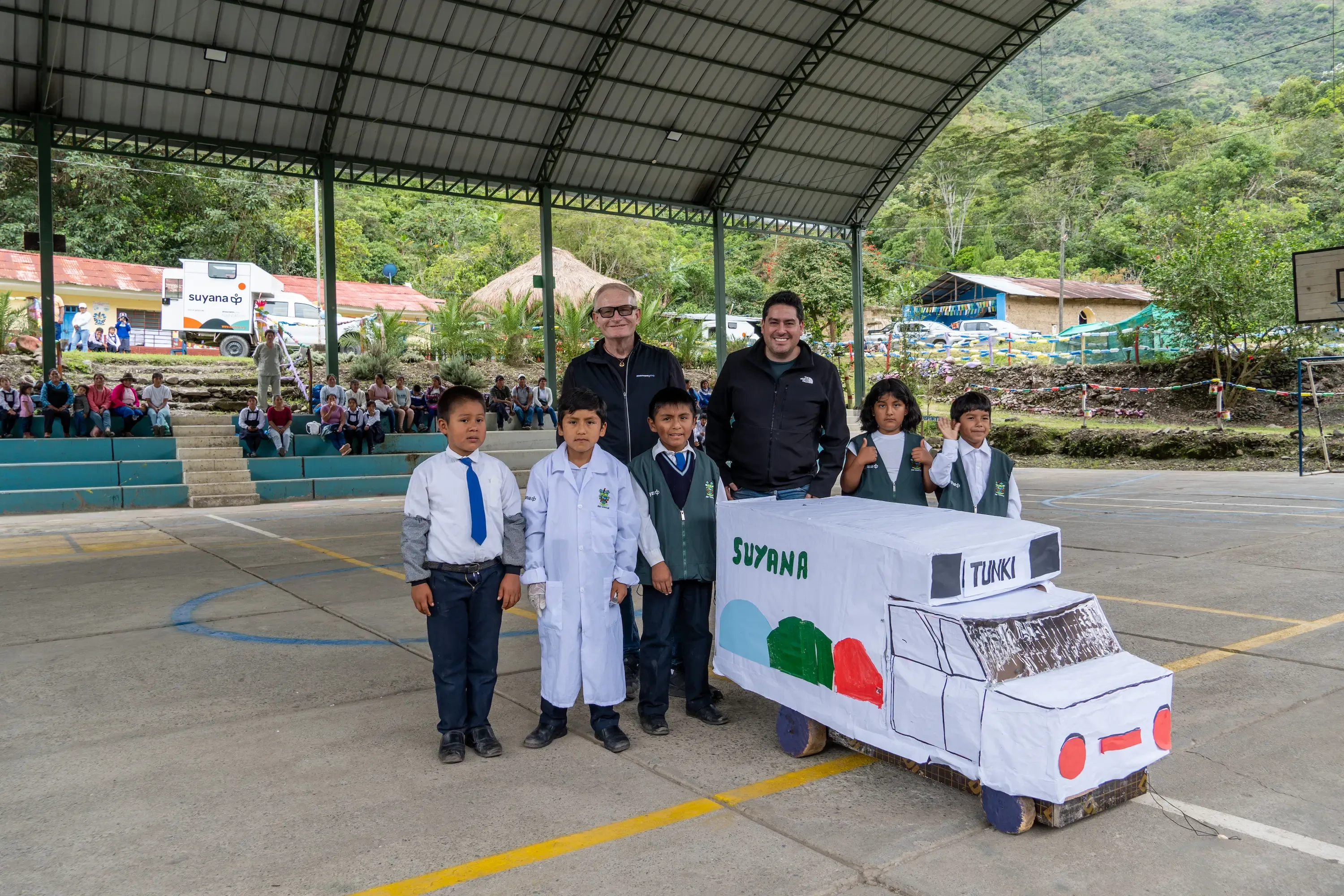
This focus fits perfectly with our mission. Suyana brings a deep understanding of local realities, operational know-how, strong networks and decades of presence in Bolivia and Peru, including in the regions of Cusco, Apurímac and Puno. We complement this with our expertise in oral health. Together, we can implement projects that combine prevention, care, the strengthening of state healthcare facilities and sustainable impact - as we are currently doing in Peru, where we are working with Suyana to set up a dental care station and mobile dental clinics to give people in remote areas access to high-quality dental care for the first time.
What general opportunities and challenges do you see in cooperation between foundations, regardless of the specific partner?
The greatest opportunity lies in joining forces. Together, foundations can share risks, learn from each other and significantly increase their impact. Partnerships also make it possible to broaden programs and better adapt them to regional conditions - whether in terms of language, culture or legislation. Especially the exchange with locally anchored partners broadens the perspective and increases the effectiveness of solutions.
At the same time, cooperation also brings challenges. Different working methods, decision-making processes or reporting requirements can make coordination more complex. Clear communication, transparency and a common understanding of goals and expectations are therefore crucial. If these foundations can be established without losing agility, partnerships are created that have an impact far beyond the sum of their parts.
What overarching lessons can foundations learn from successful partnerships to increase their impact in the long term?
Several key lessons can be drawn from successful partnerships. The most important is that common impact goals must be the overriding priority. If both sides pursue the same vision and commit to it in the long term, a stable foundation is created - even in difficult phases.
The relationship level is just as important. Partnerships only work if trust, openness and mutual respect are practiced. This takes time and conscious care. This also includes sharing responsibility - for successes as well as for challenges and necessary adjustments.
Finally, it has been shown time and again how crucial a culture of learning is. Effective foundations measure their results, reflect together with their partners and adjust programs on an ongoing basis. This shared learning makes solutions more robust and increases their impact in the long term.
Those who take these principles seriously - shared goals, practiced trust and institutionally anchored learning - not only strengthen individual projects, but also build long-term, resilient partnerships that can multiply social impact.
Valuable fundraising insights
A new approach to cultural funding