Interview with Stephan Hofer – Owner and CEO of nexumina
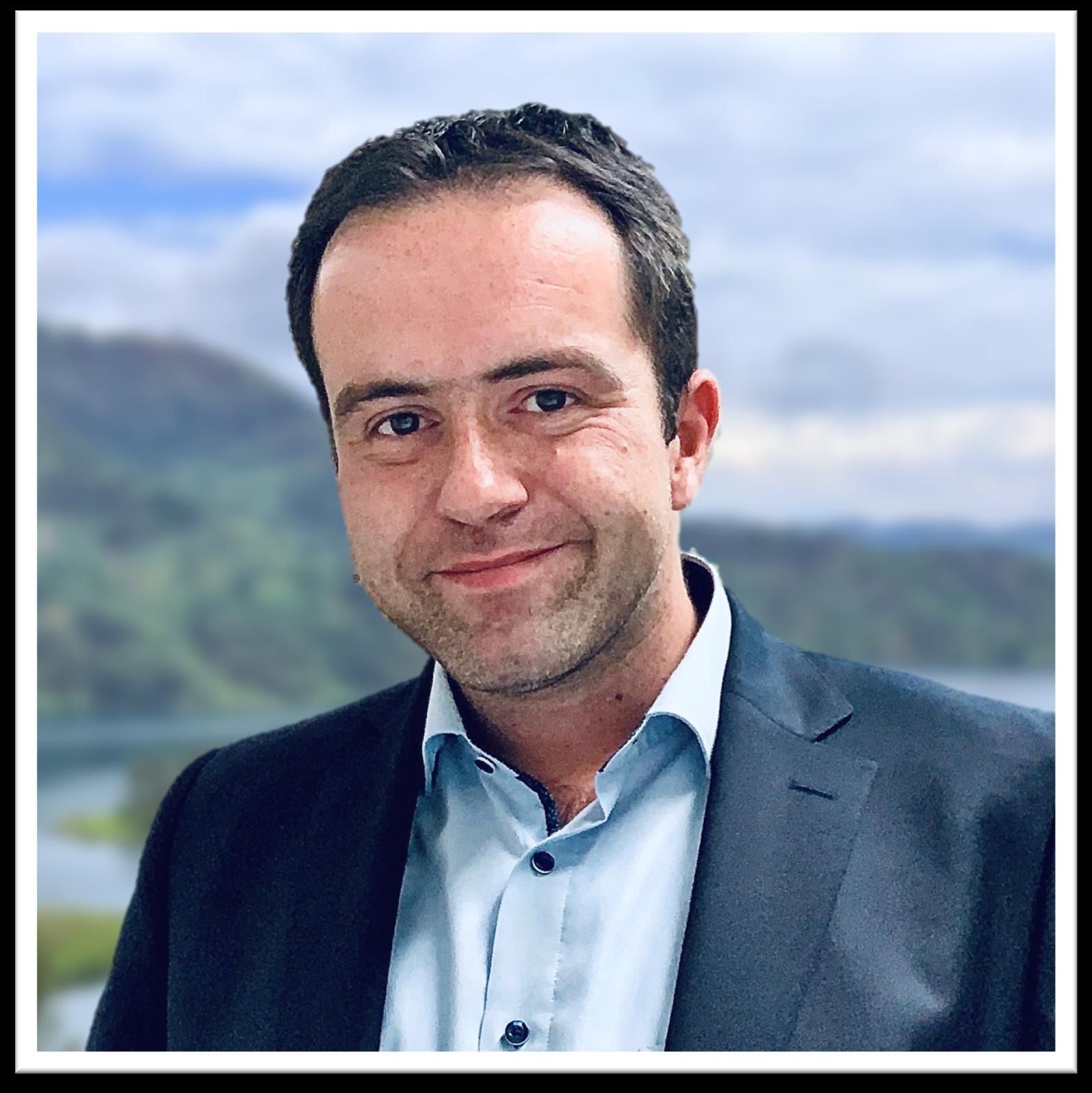
Mr. Hofer, could you briefly tell us about your career path and how you came to found nexumina?
My professional career as a lawyer began in 2013. First, I worked in the financial markets in Geneva and Basel, and then for many years in a medium-sized commercial law firm in the Bern area. It was a good and instructive time that provided me with the tools and know-how in corporate, contract, and data protection law. At some point, however, the desire grew stronger to bring more impact to my work and to focus on projects that place a high value on positive outcomes for people and the environment. This led to the founding of nexumina in early 2025 and my current professional direction.
What exactly does nexumina stand for and what is your mission?
Nexumina is a play on words. "nexu" is the short form for nexus, meaning connection. "mina" means "everyone" in an Asian language, and "I" in an African language. The name therefore stands for connections that include everyone and benefit the individual. This is also nexumina's mission. The company is set up as a law firm and focuses on (legal) support for commercial and non-profit projects in an international context. nexumina aims to support individuals, companies, and institutions in their international activities, particularly in Africa and Asia, by providing our network to support our clients holistically. In addition, we also support SMEs locally with selected legal advice.
You position yourself explicitly as a partner for companies and non-profit projects - how did this dual focus arise?
From the conviction that both worlds are needed and that they can enrich each other. Between classic entrepreneurship and charitable engagement, there is an exciting transition area in which profit-oriented action and non-profit commitment overlap. Since I know both perspectives from my professional practice, I can work precisely in this transition area. Public welfare and economic sustainability do not have to be mutually exclusive. On the contrary, their combination often creates a particularly large and sustainable impact.
Do you work more with classic NPOs (associations, foundations) or with hybrid actors like social businesses and impact investors?
Both occur, and both models have their justification. Sometimes a classic non-profit structure is the most sensible solution, sometimes a hybrid model fits a project better. For me, the focus is less on a single specific structure and more on the question of which institutional and legal setup best supports a project. The goal is always to create a structure that enables impact and is at the same time sustainable in the long term.
What legal or tax stumbling blocks do you encounter most frequently in practice with associations and other non-profit legal forms?
Under civil law, legal entities such as associations or foundations have a major advantage, which can also be their biggest disadvantage: they are only regulated in a few articles of the law.
This creates a lot of freedom in design, but also requires appropriate know-how. Understandably, many institutions fall back on standard structures. In most cases, this works well, but occasionally it leads to friction in everyday operations or to a potential impact not being ideally exploited.
In terms of tax law, tax exemption is regularly the central issue. Smaller organizations in particular often do not know exactly how to apply for it or what requirements must be met. Yet tax exemption is central for donors, because it is a prerequisite for tax deductibility. Many grant-making foundations also make it a de facto requirement.
It is sometimes a pity to see small, committed, and highly effective initiatives hit their limits in fundraising due to a lack of tax exemption or a statutory purpose that is narrower than necessary. In many cases, the necessary precautions or adjustments would not be particularly extensive.
Where do you see the greatest need for external legal and strategic support for foundations and funding organizations - rather in governance, compliance, or in concrete project structuring?
Foundations are usually well positioned in the areas of governance and compliance. This is also because they are subject to supervision and are generally subject to auditing, which provides a certain institutional framework. In my experience, many supervisory authorities see themselves not only as control bodies, but also as quite constructive points of contact.
The greater need for support is often in the structuring of projects and collaborations. Many operational organizations do not fully exploit their funding potential. Be it because potential funding partners are not even known or because projects and funding applications are not optimally set up structurally.
When projects become international, the complexity increases additionally. Governance and compliance requirements increase, as direct control possibilities decrease. In such situations, a well-thought-out legal and organizational structure becomes particularly important. This does not always require complicated constructions, but simply a clear and sustainable basic structure that is optimized with a view to its international impact purpose; both at the level of the institution and the projects. Especially for smaller or younger organizations, it can be helpful if administrative, legal, and structural questions are professionally accompanied so that the organization can focus more strongly on its actual impact.
My conclusion is therefore: The greatest need is often in laying a solid legal and organizational foundation. Building on an unstable foundation is risky because later corrections are often very time-consuming.
You focus on Africa and Asia: From your perspective, what are the biggest challenges there for international non-profit projects in relation to Switzerland - legal, cultural, operational?
Every country has its own legal system that must be taken into account. International projects between Switzerland and countries in Africa or Asia therefore need careful structuring. This is important to mitigate legal risks, but also to create a structure that is understandable and accepted in both legal systems.
Especially in corporate law, one frequently encounters structures that are unfamiliar in the respective other legal system. In many African states, for example, the Company Limited by Guarantee is a typical legal form for non-profit organizations. Classifying it correctly under Swiss corporate law, just as, conversely, understanding a Swiss association correctly under Rwandan law, is sometimes challenging.
The issue of non-profit status is also regulated very differently internationally. In Switzerland, it is primarily a tax law concept. In other countries, non-profit status is rather anchored in civil law or not clearly defined at all. It can therefore be difficult for Swiss funding partners to classify foreign organizations and assess whether they meet the expectations of non-profit status.
Operationally, an arbitrary picture often emerges: in Switzerland, the founding of an organization is relatively formalized, while the operational activity thereafter is comparatively free. In many African and Asian countries, on the other hand, the founding is relatively uncomplicated, while numerous additional permits, registrations, or reporting obligations may be required for the operational activity. These differences are often underestimated, just like cultural aspects: different ideas about time, planning, transparency, or family obligations can play a role in everyday project life. It becomes particularly challenging when things that are taken for granted in one culture are not perceived that way at all in the other. In Switzerland, for example, a very structured, long-term plannable project process is often expected. In many emerging and developing countries, however, flexibility, the ability to improvise, and spontaneous problem-solving are part of everyday life. An awareness of these differences is crucial to avoid misunderstandings and disappointments on both sides.
Is there a project that for you exemplifies how well-structured cooperation between Swiss actors and partners abroad can create sustainable impact (without naming names)?
There are (fortunately) very many of those. A particularly nice example for me is a small project in the field of legal education and professional support. The goal is to facilitate the transition into professional practice for needy and impaired graduates of an African law faculty, while at the same time opening up international perspectives for them. On the one hand, there are committed local partners with a very good understanding of regional needs. On the other hand, there are supporters from Switzerland who have brought in know-how, networks, and financial support.
Structurally, we set up the project as a hybrid: the core program is implemented locally and by locals via an operative non-profit Company Limited by Guarantee. The local company is in turn completed via an affiliated Swiss association, which bundles the Swiss know-how, supplements the core program with Swiss inputs, and offers the funding partners in Switzerland the comfort of interacting with a legal entity that is customary and has all the recognitions important for funding foundations.
From my point of view, such projects show very well that sustainable international impact rarely arises from individual initiatives. It arises where different actors bring in their respective local strengths and where the cooperation is organized structurally and legally in such a way that it can function in the long term. And this can be implemented well and highly efficiently not only by larger organizations, but also by very small projects.