Manuel Bauer: "Photojournalism can move villages"
The well-known Swiss photojournalist Manuel Bauer once raised money to save a village in Nepal from the consequences of climate change. Today, he supports future generations of dedicated photojournalists with TruePicture. A conversation about the power of images, the possibilities of philanthropy and "alternative facts".
Mr. Bauer, could you start by telling us something about yourself - where did you grow up and how did your path lead you to photography?
I grew up in Küsnacht on Lake Zurich. The hamlet of Itschnach was a rural farming village back then. My father was an artist, illustrator and graphic designer. His studio was in an old building shack. At the lunch table, I often heard my father say that he turned down commissions for ethical reasons. However, he worked for art museums and NGOs at reduced prices. He was a role model for me. This freedom to shape his life according to his own convictions impressed me. I wanted that too. I said to myself, I can't draw, then I'll become a photographer.
How did your first personal meeting with the Dalai Lama come about and what significance did this experience have for your life?
That was 35 years ago. I was 23 years old and in India for a reportage. We were researching whether the culture in Tibet, which had been destroyed by the Chinese occupation, could survive in exile. Later, the Dalai Lama opened our photo exhibition "Tibetan culture on foreign soil" at the University of Zurich. During the event, a bomb threat was received against him, which caused noticeable unease among all those present. Except for the Dalai Lama. He remained very calm and made jokes. That was very impressive. I have been documenting his life ever since. Photos can be role models. The Dalai Lama is the master of his emotions. We should learn from him!

What does "philanthropy" mean to you personally - how do you interpret this term in your professional and private commitments?
I associate "philanthropy" with investments in socially relevant areas where state structures reach their limits. This applies in particular to culture and journalism: they are not simply "nice to have" for a functioning coexistence, but create spaces in which we can constantly renegotiate our ideas of "democracy", "truth" and "meaningfulness".
The story from Mustang sounds almost unbelievable: desperate farmers asked you to help them move an entire village. To what extent did philanthropy - whether through private donors or foundations - play a role in this early phase?
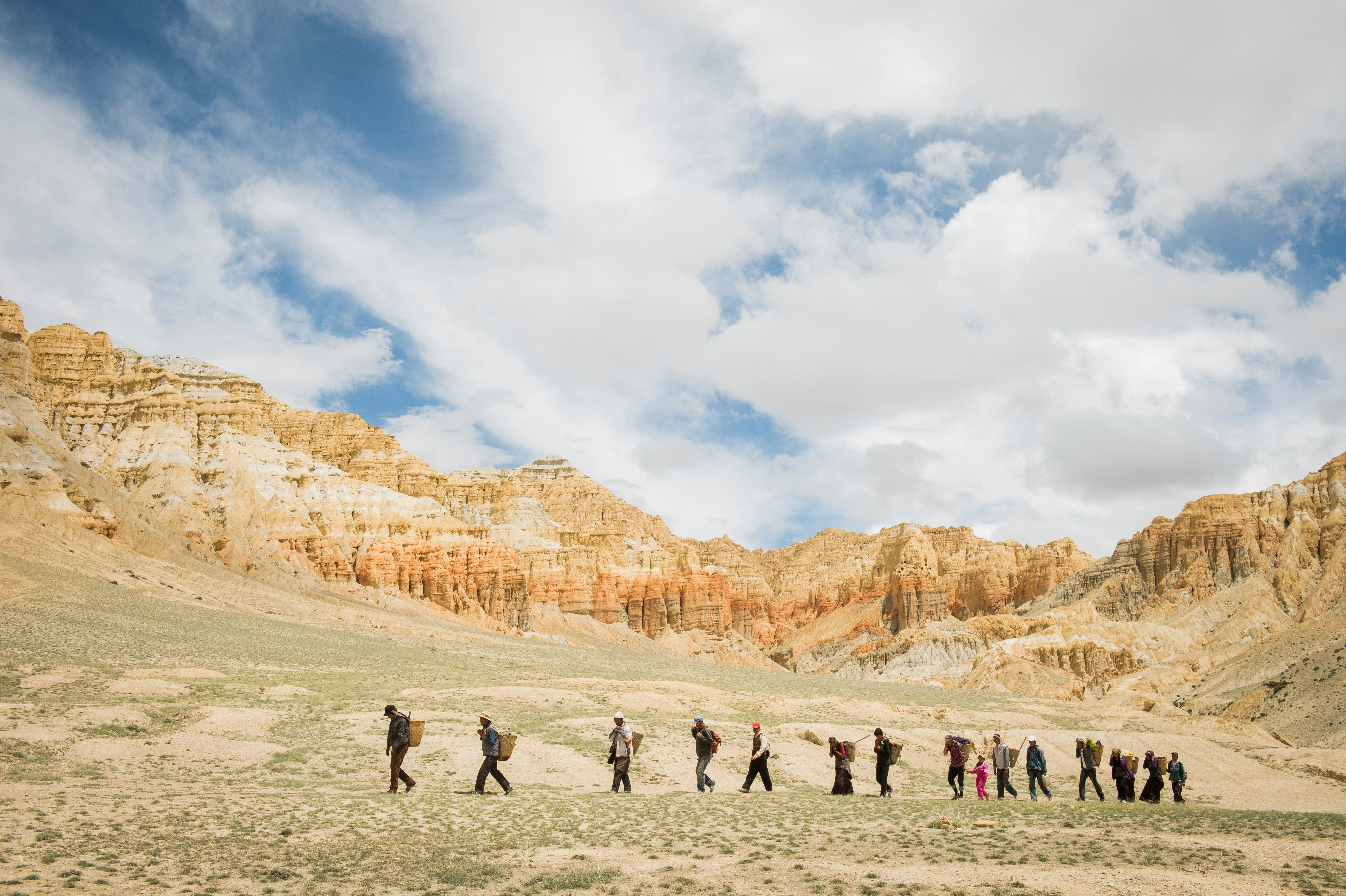
The village of Sam Dzong in Mustang had hardly any water left due to climate change. The farmers had to abandon their fields and look for new, fertile land. The king gave them land on the main river: But the donated land was littered with hundreds of boulders, some weighing tons, which could not be removed by hand. So I promised to raise the money needed to bring a bulldozer to this remote region. I gave talks in Switzerland with a self-made donation box - the generosity of the donors was overwhelming. With my photo report on Mustang, I was able to show donors the concrete impact of their support. It is an example of how socially relevant photojournalism cannot move mountains - but it can move entire villages!
You started with a budget that soon turned out to be insufficient. What role did philanthropic support play in overcoming the biggest challenges and still successfully moving the project forward?
The Mustang project required a lot of creativity, especially when it came to fundraising. Together with journalist Christian Schmidt, I launched a crowdfunding campaign. Our idea was that if supporters financed our travel costs, we could carry out research on site and reach a much wider donor base with a report in a major publication. The plan worked - in the end, around 25 times the donated travel costs flowed into the village project.
You made the story known through your pictures and gained support from private donors and foundations. How important was the power of photography in this process?
Photography is an intuitive, emotional medium that touches people directly. In Vietnam, it was photos that contributed significantly to the end of the war. They showed people the true horrors of what was happening and changed people's opinions. The text also played a central role in the report on Sam Dzong. Christian Schmidt was an exceptionally precise and empathetic author.
The resettlement project was successfully implemented thanks to philanthropic help. What have you personally learned from this project?
Perseverance, gratitude and humility. The project was anything but easy. It involved building a remote village at an altitude of almost 4,000 meters, cultivating fields and building irrigation channels. The move was a huge step. I am grateful to the many supporters for their trust and for giving the Sam Dzong Ngas a future. It is almost like a miracle: the Sam Dzong have always believed in themselves: today they live happily in their new village, have enough water and good harvests.
You founded TruePicture, a support and mentoring program for young photojournalists. What role do philanthropic support and foundations play in the development and sustainability of this project?
TruePicture is entirely dependent on private funding. However, many foundations do not make a long-term commitment, and without planning security, it is difficult for us to achieve a sustainable impact.
TruePicture is different from other funding programs and photo awards: We do not award finished reportages, but invest in young photographic talent and their reportage ideas. The focus is on the social relevance of the project idea and the credibility of the authors. The winners of the "TruePicture Awards" are actively mentored by TruePicture during the realization of their long-term reportages.
We are not yet able to present the founders with finished results at the award ceremony - the work takes one to three years to complete. Initially, funding was slow, and a foundation encouraged me to start with a small budget and grow slowly. Later, the same foundation financed an office, as TruePicture was now too relevant to be managed by me alone. The potential of private philanthropy lies in placing trust in people and projects quickly and unbureaucratically - with the courage to fail.
TruePicture is a gamble: a renowned nomination committee proposes project ideas from young photojournalists for the "TruePicture Awards", the winners receive financial support and mentoring to realize their relevant reports. To what extent do philanthropic funds and cooperation with foundations help to make this model possible?
TruePicture cannot be easily assigned to a single funding category - and that's what makes funding challenging for us. We support talent, education and high quality photography, often straddling the fields of art, press freedom and the promotion of democracy. Fortunately, we have already been able to gain a number of partners who do not make decisions based on abstract criteria, but rather recognize the quality and impact of our broad approach and appreciate our multi-layered method. We are very grateful for this.
We receive numerous applications every year. What does this interest tell you about the importance of photojournalism - and how do you see the role of foundations and philanthropic actors in supporting a new generation of journalists?
It is impressive how young photojournalists are convinced of the political importance of their profession and are aware of their social responsibility. This is despite the collapse of editorial budgets. Thanks to philanthropists and foundations, I was able to experience the great impact of photography for myself. TruePicture would now like to share this experience with a new generation of committed photojournalists.
Especially in the age of fake news and dwindling democratic awareness, what role can engaged photojournalism play today and how can philanthropy help to amplify its impact?
Fact-based journalism is important for democracy. If we lose faith in the journalistic image, we lose an important medium for the free formation of opinion. The flood of images and artificial intelligence are changing our perception. The technical verification of digital photographs is reaching its limits. The credibility of authors and editorial teams will therefore be crucial. Investments must be made in quality journalism.
Could a new way of thinking in the private cultural funding sector not only strengthen artists and journalists, but also make a significant contribution to supporting democracy and a critical public in the digital age?
This is exactly where TruePicture comes in. We connect philanthropy with authentic authors, socially relevant topics and fact-based photojournalism. To stand up to fake news.
EXHIBITIONS "TruePicture 2026" in Winterthur
23 JANUARY 2026
18:00 Vernissage in the Coalmine
18:30 Opening and party DJ frank panther *dj* at Museum Schaffen
More info at: www.truepicture.org
Valuable fundraising insights
Rethinking cultural funding