"Our charitable foundations can also draw on the network and expertise of our employees."
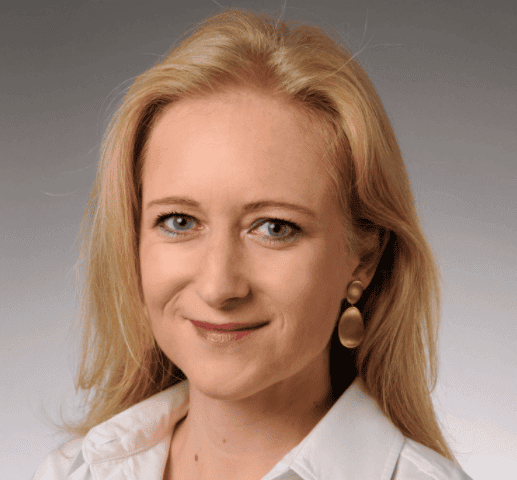
Interview with Laura Hemrika, Global Head of Corporate Citizenship & Foundations and Managing Director of the Credit Suisse Foundation
Before we dive into the fascinating world of foundations, would you tell us more about yourself?
My interest in charitable issues has been a common thread throughout my career. I started out in the world of education and NGOs and was then able to support the further development of numerous organizations in the areas of microfinance, fintech and education in consulting. I was particularly fascinated by microfinance and joined Credit Suisse in 2010, where I set up the global "Microfinance Capacity Building Initiative" and implemented it for several years. I have been Head of Corporate Citizenship & Foundations since 2016 and have the pleasure of working with a global team to drive forward Credit Suisse's social commitment around the world. Since the end of 2020, I have also been responsible for the activities of the Credit Suisse Foundation, one of the bank's four corporate foundations.
Tell us more about the Corporate Foundations. What motivates Credit Suisse to set up charitable foundations?
Credit Suisse has a long tradition of philanthropy and foundations have always played a central role in this. Establishing a foundation sends out a clear signal: We are here to stay and are committed to the long term. This can be seen, for example, in our Credit Suisse Americas Foundation, which has been active for over 60 years. And today's global Credit Suisse Foundation also celebrated its 40th anniversary in 2021. In the Europe, Middle East and Africa region, the regional foundation has been active since 2008, and in Asia the Credit Suisse APAC Foundation was added in 2020. The foundations are an integral part of our social commitment. In line with our global corporate citizenship strategy, they make charitable grants to organizations that are primarily active in the areas of "Financial Education", "Financial Inclusion" and "Future Skills". In this way, we support specific projects and initiatives that aim to achieve a social impact. Although we have a global strategy, it is important to us that all our foundations act in a needs-oriented manner and are adapted to the respective regional realities. The boards of trustees and the corporate citizenship teams in the regions know the local or regional needs and align the foundation's activities accordingly - always in line with the foundation's purpose.
Charitable foundations are committed to a good cause, want to make a difference or tackle a specific problem. Do corporate foundations pursue other goals? What makes them special?
Corporate foundations must also implement their foundation purpose. What distinguishes corporate foundations from "normal" charitable foundations is their approach. Our corporate foundations support their partner organizations with financial resources and can also draw on social capital, i.e. the bank's employees. With their expertise and time, they complement and strengthen the impact of the financial contributions by making their knowledge in various specialist areas (e.g. finance, HR, IT, marketing) available to the partners. We can also offer our partners internal and external platforms to draw attention to their concerns and at the same time benefit from the Bank's large network. Our partners greatly appreciate this additional non-monetary support.
Many people are not aware of the difference between sponsorship and philanthropy. Are there differences?
Yes, definitely. Our four corporate foundations all make charitable contributions, i.e. they donate funds to tax-exempt organizations so that they can implement their programs and projects, and there is nothing in return. I would like to illustrate this with a specific example: our Credit Suisse Foundation supports a selected portfolio of foundations and associations in Switzerland, including the go tec! foundation in Schaffhausen. This foundation makes technology, which is often invisible in everyday life, tangible for schoolchildren. With a contribution to the "Internet & Code for Girls" project, we are helping the go tec! foundation to introduce girls in particular to the topics in a playful way and allow them to immerse themselves in the world of STEM (science, technology, engineering and mathematics). Sponsoring, on the other hand, usually involves a service in return, i.e. the sponsor receives media and logo presence, for example.
Are there any developments in the foundation landscape that you are following particularly closely and/or driving forward yourself?
The numerous innovative approaches that pursue the goal of achieving social impact are certainly promising; for example, cooperation with state actors or competitors, as is the case with the recently launched "Sustainable Development Goal Impact Finance Initiative". The State Secretariat for Economic Affairs (SECO), the UBS Optimus Foundation, the Credit Suisse Foundation and the Swiss Agency for Development and Cooperation (SDC) want to mobilize up to one billion Swiss francs in private capital for development financing. We also see a growing number of innovative financing mechanisms (e.g. impact investing, social entrepreneurship) and technological developments that charitable organizations can take advantage of. Foundations have the opportunity to support these developments and promote them by providing "risk and innovation capital". We are therefore operating in an exciting environment and see a mix of innovation, collaboration and technology that will shape the way foundations engage in the future.