The Robert Bosch Stiftung supports international initiatives
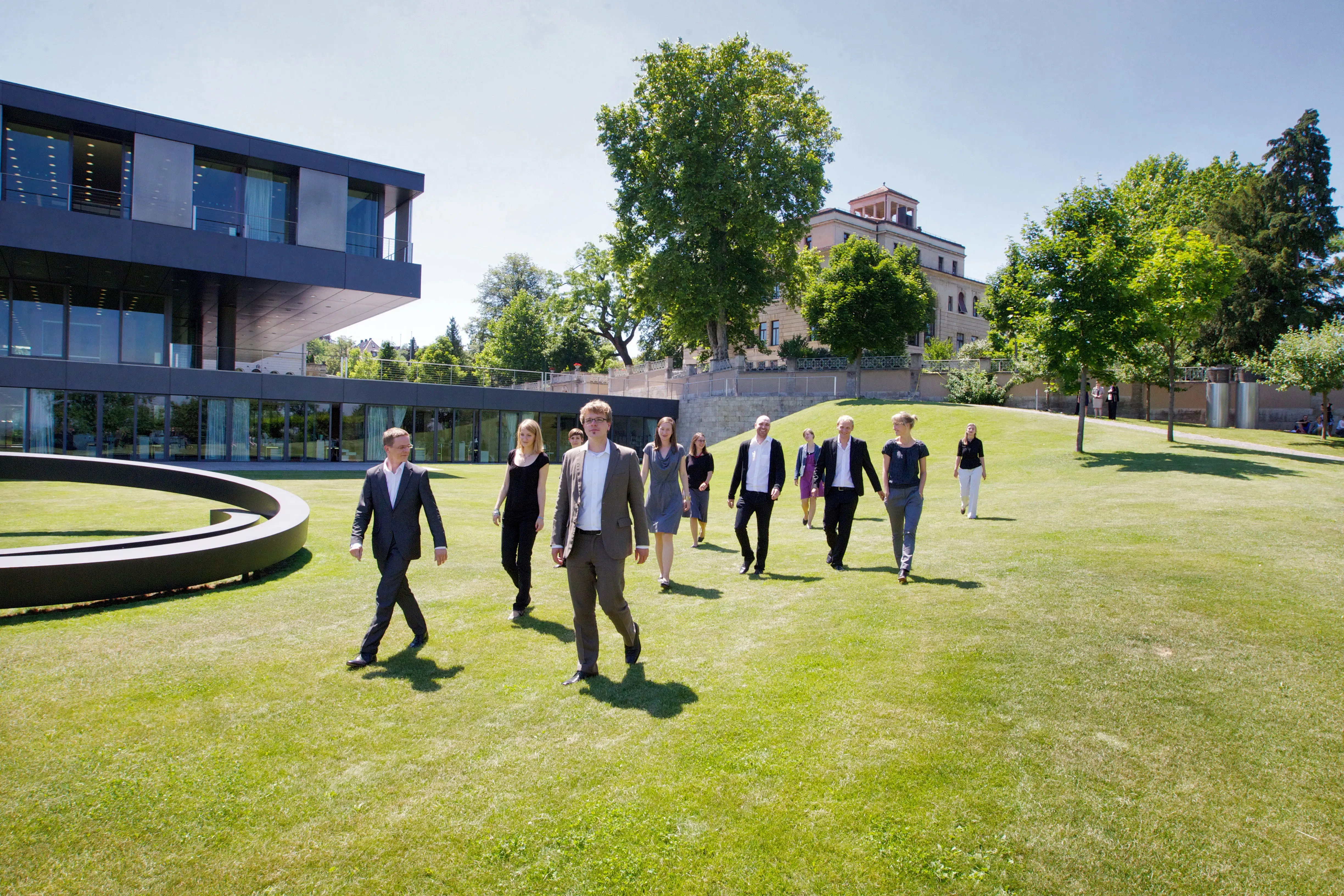
The Robert Bosch Stiftung is one of the largest and most influential players in the German foundation landscape, and not just as a funding institution. Thanks to its funding priorities, it is active worldwide. In particular, the transnational project "Common Ground - Shaping Regions Across Borders" shows that the Foundation also supports very large projects.
The Robert Bosch Stiftung is one of the largest and most important corporate foundations in Germany. Founded in Stuttgart in 1964 in accordance with the will of the industrialist and engineer August Robert Bosch (1861-1942), it is now one of the country's financially strongest foundations with an additional office in Berlin. Although it operates as a foundation, it is not a traditional foundation under civil law but a non-profit limited liability company that includes the term “Stiftung” (foundation) in its name.
In order to manage his assets in the long term and use them for charitable purposes, Robert Bosch made appropriate provisions in his will as early as 1921. After his death, his shares in Robert Bosch GmbH were transferred to this asset management company over a period of 30 years, until the Robert Bosch Foundation GmbH was finally established in 1964, albeit still under the name "Asset Management" until 1969.
Promoting the common good, education and health
Around 94 percent of the shares in Robert Bosch GmbH are owned by the Foundation. It finances its activities exclusively from the resulting dividends. Investments in charitable projects have amounted to more than 2.3 billion euros since the Foundation was established. The Foundation is not itself active as a commercial enterprise and currently employs around 170 employees.
The structure of the Robert Bosch Stiftung is based on three main bodies: the Partners' Meeting, the Board of Trustees and the Management Board, which is responsible for operations. The Board of Trustees, which includes members of the family as well as entrepreneurs and personalities from society and culture, is responsible for deciding on the use of funds and areas of support.
The Robert Bosch Stiftung sees the promotion of the common good, the improvement of education and health as well as international understanding and social development in the spirit of the founder as its fundamental purposes and goals. This results in the three main areas of support: health, education and global issues. In this context, the Foundation also operates its own facilities such as the Robert Bosch Hospital with the Dr. Margarete Fischer-Bosch Institute for Clinical Pharmacology in Stuttgart, the Robert Bosch College UWC in Freiburg im Breisgau, as well as the International Alumni Center and the Robert Bosch Academy in Berlin. This clearly distinguishes the Foundation from pure grant-making foundations.
Commitment in 26 countries
Although the Robert Bosch Stiftung focuses its funding activities on Germany (around 219 million euros in 2024), its impact extends far beyond national borders. According to the annual report, the Foundation was active in 26 countries in the same year, including European countries as well as countries in the Middle East and selected regions of Africa. The Global Issues funding area addresses aspects such as democracy, migration, climate change and social exchange at an international level. The funding volumes are higher than for projects within Germany; however, the international activities are of great strategic importance.
For civil society actors outside Germany, this means that applications for funding from the Robert Bosch Stiftung are generally possible. Although calls for proposals are thematically specified, they are formulated in an open manner so that international applicants can be considered as potential funding recipients. This also applies in particular to cross-border projects.
Strengthening democracy
Among the projects funded in the past was AcademiaNet in 2010, a database that acted as a platform to help scientists and, in particular, female scientists in leadership positions gain visibility. Swiss stakeholders were also involved in this project. In 2020, the Swiss National Science Foundation took over the sponsorship. However, the platform was closed five years later.
The study "RepChance - Political Representation in Inclusive Societies", the results of which were published in 2025, was also produced with Swiss participation (Université de Neuchâtel). Other transnational projects (in the DACH region) of the Robert Bosch Stiftung include "Islamberatung in Deutschland, Österreich und der Schweiz", "Economy is Care", a network to strengthen the care movement in Germany, Austria and Switzerland, and "Faktor D - Hub für Demokratie".
Promoting cross-border citizen participation
Current projects include "Common Ground - Shaping Regions Across Borders". The Hochrhein planning region, with Basel at its core, was one of eight funded regions in the pilot phase, which lasted from 2020 to 2025. The core of the project in all participating regions is to strengthen cross-border citizen participation in German border regions with the respective neighboring countries. The aim is to involve the population in political and regional shaping processes and to raise awareness of democratic trust and cohesion in the long term. Politics and administration in the respective regions have different administrative hurdles and inadequate participation structures for civil society. Sylvia Hirsch reports that the Robert Bosch Stiftung did not realize at the outset that this focus alone would pose a challenge. She is the project manager of "Common Ground" and points out that the project period was already well advanced, while the proverbial "constant dripping that wears away the stone" still had to work out the difference between cooperation and participation.
Cooperation between civil society and the municipality
With scientific support for participation processes, the aim was to develop low-barrier formats and involve previously less-reached population groups. The topics covered range from cross-border energy supply, climate change and health to spatial planning and joint crisis management. "First and foremost, it was important to us that there was cross-border participation. The topics were of secondary importance. We didn't want to limit it. It was more about using the instrument of citizen participation to work on a meaningful issue," says Hirsch. "Even if the funding goes to the municipalities, it was not intended to be a purely municipal program, but rather a collaboration between civil society and the municipality." In the case of the Hochrhein region, it was actually the topic of spatial planning that ultimately emerged as the core. Cross-border commuter traffic had not been coordinated to date. There is also a high demand for living space. It seemed particularly important to start here.
Inclusion of marginalized groups
In addition to funding, the support included process consulting, further training, network meetings and a formative evaluation. In addition to a general report, the results were published in separate country reports. Not surprisingly, these reports also revealed regional and national peculiarities, as Claudia Bosch also found out. She is a research associate at nexus Institut für Kooperationsmanagement und interdisziplinäre Forschung GmbH, which acted as a service provider for the local implementation of the project. It is therefore Claudia Bosch who was able to perceive the differences in the participation cultures: "In Switzerland, direct democracy is not uncontroversial in the structures. That's why it was also important to us to establish a deliberative exchange. It was not at all easy to get a citizens' panel of 25 participants from Switzerland and Germany together. But those who were involved were enthusiastic." Reaching marginalized target groups in the inclusive approach also remained a challenge. Here too, older, well-educated population groups were easier to activate than young people, for example.
Agile processes on both sides
As a result, many details were also designed in an agile process, as Claudia Bosch emphasizes. This was possible not least because the Robert Bosch Stiftung, as the funding institution, held back with further specifications, also with regard to the specific use of the funds. Maintaining relationships and building trust are just as important. "Then you dare to admit in the project when something isn't going perfectly. And that happens when you try something new," says Sylvia Hirsch. The Foundation has designed its funding management accordingly. In contrast to most funding projects, it was not necessary to have a completely differentiated financial plan in advance. This was resubmitted every six months, which allowed for a high degree of flexibility in implementation despite the increased workload.
Exchange of experience between the participating regions
Patrick Leypoldt was directly involved in the implementation on the project sponsor side. He is the managing director of the Agglo Basel association, which brings together nine regional authorities from Germany, France and Switzerland "to jointly promote the sustainable and integrated development of landscape, settlement and transport across borders", according to the official objective. And Leypoldt notes: "Without the Robert Bosch Stiftung and Nexus, there would also have been a spatial concept, but not with the support of public participation. That was very important to us." He emphasizes how the Robert Bosch Stiftung was not only permanently available as a contact partner during the project phase. He also praises the exchange of experience between the participating regions, which the Foundation also facilitated. Leypoldt says he is satisfied with the result, the spatial concept that was developed. It was well received by the politicians. Where there is still room for improvement is the level of awareness among the general public. Despite all the participation achieved, this has remained sporadic. But a start has been made: "It is a joint strategy that crosses borders and that everyone is now following and trying to incorporate the thrust into their country-specific instruments that are binding on the authorities. That is actually the valuable thing."
Raising the potential at EU level
The project partners were not the only ones to learn. The funding program was also a pilot project for the Robert Bosch Stiftung. In the next step, the foundation wants to raise the resulting findings at EU level via the Working Community of European Border Regions in order to promote further developments here. "If you want to promote this on a large scale, it has to come from an EU pot. No foundation can do that. We're talking about several million euros," says Hirsch.
The finished spatial concept for the Hochrhein region now includes a good 27 measures that are to be implemented, mainly in the areas of landscape, settlement, transport and cooperation. Why will the Robert Bosch Stiftung no longer be involved with further funding? "This now requires the municipality, canton or district to implement these projects and possibly involve the population in them," says Leypoldt. His conclusion regarding the collaboration with the Robert Bosch Stiftung is therefore clear: "I would do it again at any time. We don't have another project at the moment, but if the Common Ground program continues, perhaps there will be a third phase after the second and we have a suitable project, I can imagine that we will then apply for funding again."