Interview with André Poulie - founder of the Theodora Foundation
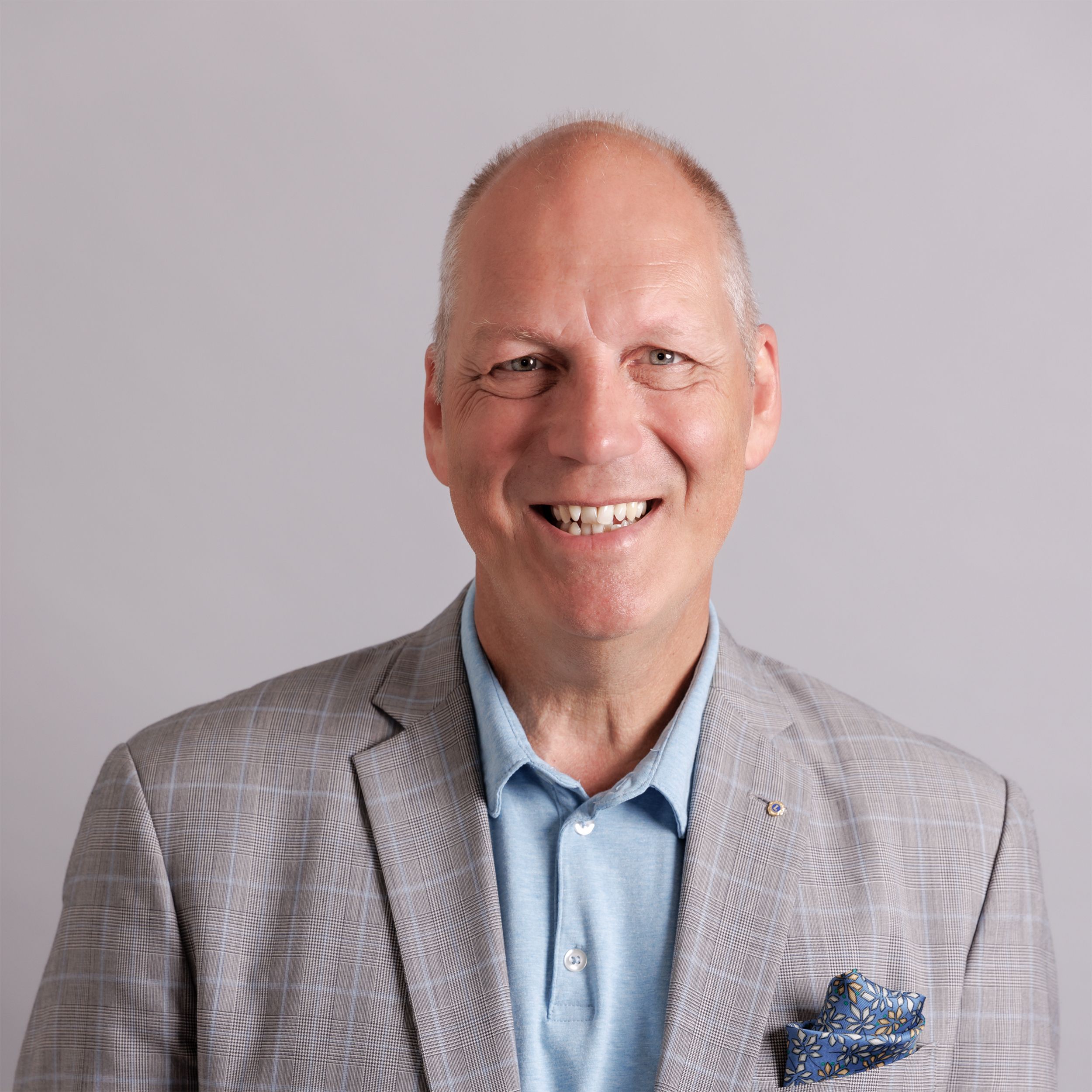
Please tell us about your background and how it came about that you founded the Theodora Foundation. What was the decisive moment when this idea became a real project in your mind?
I grew up in Switzerland with a mother, Theodora, who had an extraordinary gift for bringing joy to others. When I was ten years old and hospitalized after a serious accident, she would visit me and naturally transform the atmosphere of the hospital room through stories, laughter and imagination - not only for me, but for all the children around me.
After her passing in 1992, my brother Jan and I wanted to honour her memory in a meaningful way. The decisive moment came during the winter of 1993. I suddenly remembered an article I had read years earlier in the United States about hospital clowns created by Michael Christensen, also known as Dr. Stubs. Something immediately clicked in my mind. I realized that what my mother had naturally brought to children in hospital could perhaps become a real mission carried by professional artists. With the support of the University Hospital in Lausanne (CHUV), we launched a pilot project, and the very first visit of the Giggle Doctors took place on my mother's birthday, April 20th, 1993. The response was so positive that the Theodora Foundation was born soon after.
The foundation bears your mother's name, Theodora. How would you describe her and the role she played in inspiring the foundation's mission?
My mother, Theodora, was an incredibly warm, imaginative and generous person. She also played the piano beautifully, and music was a very important part of her way of connecting with others and bringing joy around her. She had a natural ability to comfort people and make them smile, especially during difficult moments.
She had a remarkable gift for transforming difficult situations into moments of connection, lightness and hope. Whether with family, friends or children in hospital, she instinctively knew how to bring comfort and joy to those around her.
The mission of the Theodora Foundation is deeply inspired by her spirit. Through the Giggle Doctors, we wanted to continue what she did so naturally: bringing joy, emotional relief and moments of escape to hospitalized children and their families. We like to say that she was the first Giggle Doctor.
In the very beginning, what did the first concrete steps look like at the University Hospital of Lausanne - from the first hospital visits to establishing a professionally run foundation?
At the beginning, the main challenge was that this concept did not exist in Switzerland yet. My brother Jan and I contacted the CHUV in Lausanne, where we met Dr. Daniel Beck, an oncologist who immediately understood the importance of caring not only for the child's body, but also for their emotional well-being. We were also supported by Christa Tébbe, the head nurse who had cared for me years earlier after my accident and still remembered my mother's visits to the hospital.
Together, we launched a three-month pilot project in 1993. The very first visit of the Giggle Doctors took place on April 20th, our mother Theodora's birthday, with Dr. Panosse and Dr. Bobo visiting children in the paediatric ward. The response was extraordinary - children, parents and healthcare staff were deeply touched by these moments of laughter and escape. The first visit also received beautiful media coverage, which helped raise awareness of the project very quickly. This visibility was also crucial in convincing further supporters. At the time, programmes with healthcare artists were completely unknown in Switzerland. We had to explain not only what we wanted to do, but also why emotional well-being is an essential part of a child's care.
Seeing the scale of this success and the growing demand from hospitals, we realized that this initiative answered a real need. This is what encouraged us to officially create the Theodora Foundation as a public utility foundation and to develop regular visits of Giggle Doctors across Switzerland.

How did the transition from a Swiss initiative to a network of independent sister organizations in other countries (for example in England, Spain and Italy) actually happen in practice?
The international development of the Theodora Foundation happened both through a unique opportunity and a shared conviction: that the world of children has no borders and that every child deserves moments of joy, comfort and emotional support during difficult times.
Following the successful launch of the Giggle Doctors program in Switzerland, my brother and I took part in an international competition organized by KLM Airlines on the occasion of its 75th anniversary. The aim of the competition was to «Bridge the World» by supporting projects that could be replicated across different continents. Convinced that our Giggle Doctors program was perfectly suited to this vision, we submitted our project among nearly 20'000 entries. To our delight, it was selected as one of the five winners.
This recognition gave us the opportunity to expand internationally and, with the support of friends from our boarding school network, we established Theodora Foundations in Brazil, South Africa, Hong Kong and Turkey.
As the concept continued to prove its value, we later focused our efforts on Europe, where a network of independent sister organizations progressively emerged in countries including England, Spain and Italy. Rather than managing these organizations directly from Switzerland, we chose a model that allowed each foundation to adapt to its local culture, healthcare system and fundraising environment, while remaining faithful to the same mission: bringing joy, emotional relief and moments of escape to children in hospitals, specialized institutions and other care settings through the visits of professional Giggle Doctors.
In practice, the Swiss foundation shared its experience, training methods and operational know-how, while also providing targeted financial support to help launch and develop activities in new countries. Over time, each organization became fully independent while remaining part of the wider Theodora family through shared values, regular exchanges and a common commitment to improving the well-being of hospitalized children.
Today, the Theodora network operates in six countries. In 2025, nearly 190 professional artists visited children in 180 hospitals and specialized institutions, bringing smiles and emotional support to more than 200'000 children and their families. Seeing an initiative that began in Lausanne grow into an international movement has been one of the most rewarding aspects of our journey.
What criteria do you use when deciding where and how to expand?
The world of children has no borders, and this conviction played an important role in the international development of the Theodora Foundation. In the early years, we helped introduce and support healthcare clowning initiatives in several countries because very few such programmes existed at the time.
Today, artists in the healthcare setting have become well established around the world, and expanding into new countries is no longer a strategic priority for us. Our focus is on strengthening the quality and impact of our existing programmes and contributing to the development of the field through collaboration, research and knowledge sharing.
Hosting the Healthcare Clowning International Meeting (HCIM) 2026 in Lausanne was a powerful illustration of this evolution. Bringing together 684 participants from 46 countries demonstrated how far the profession has evolved and reinforced our belief that the future lies in collaboration rather than geographical expansion.
You are active in countries with very different cultures of giving and hospital systems. Where did you experience the greatest cultural differences when it comes to fundraising?
One of the greatest differences we experienced in fundraising was certainly in the United Kingdom, where a strong culture of giving and supporting charities exists. Whether at school or by following their parents' example, children become aware from a very young age that charities play an important role in society and need support.
As a result, charitable giving is deeply rooted in everyday life, and fundraising is often the main source of income for small and medium-sized charities such as Theodora UK. This creates an environment that is particularly favourable to philanthropy, but also highly professionalized. Good fundraisers are difficult to find and represent a precious asset for any fundraising team.
More broadly, we have learned that every country has its own traditions and habits when it comes to giving. While the motivations may differ, we have found that people everywhere are willing to support a cause when they understand its impact and feel emotionally connected to it.
Could you share an example where a fundraising method that worked well in Switzerland needed to be adapted significantly for another country?
A good example is the use of traditional fundraising mailings. In Switzerland, sending newsletters and fundraising appeals by post has proven to be an effective way of communicating with supporters and raising funds. However, this approach does not work equally well in all countries.
In several European countries, and particularly in the United Kingdom, regulations regarding the protection of privacy and personal data make such fundraising strategies much more complex and, in some cases, even risky to implement. As a result, these methods have had to be adapted to local regulations and fundraising practices.
What remains important everywhere, however, is the human aspect of fundraising. A personalized, authentic and sincere thank you letter sent within a week of receiving a donation, combined with transparent reporting on how funds are used, is appreciated in every country and helps build lasting relationships with donors.
When you visit a hospital today and see a Giggle Doctor at work, what goes through your mind, compared to the very first visits in Lausanne?
Every time I visit a hospital and see a Giggle Doctor at work, I feel both deeply moved and incredibly grateful. Of course, I immediately think about those very first visits in Lausanne in 1993, when everything was still an experiment and we had no idea how far this project would go.
What touches me most is that, despite the growth of the Foundation over the years, the essence has remained exactly the same. I still see children forgetting, even for a few moments, the stress of hospitalization. I still see parents smiling with relief and healthcare staff appreciating the positive atmosphere created by the visits.
It also reminds me of my mother, Theodora, because the spirit she brought naturally to children in hospital when I was hospitalized is still alive today through every Giggle Doctor visit. Seeing that this simple idea continues to bring comfort and joy to so many families is something very emotional for me.
